
Clinton Release Mugshots and Records
A booking photograph is an identity image made during booking. It may remain in the sheriff’s underlying file after a live custody row disappears. Ohio access analysis begins with ORC 149.43 and any specific exception. Release proof is separate. Ask for the final custody entry, release date and time, disposition, and any nonexempt destination field.
The sheriff’s Active Inmates product is current-only. A missing name may mean community release, transfer, movement under another order, or an administrative change. An old photo also says nothing about a current case result.
Where Clinton Release Mugshots Appear
Each official channel covers a different group and has a different retention limit. Start with the agency that created the image.
| Channel | Has photo? | How to access |
|---|---|---|
| Sheriff Active Inmates | Inspect the current record | Only while shown in current custody |
| MobilePatrol | Not guaranteed by published text | Check the current county feed |
| Sheriff records | Request the booking image | Identify the exact booking |
| ODRC | May display an offender image | Only for a state-system record |
| Sex-offender registry | Yes, for registrants | Narrow statutory registry |
| Official press or news | Sometimes | Secondary, potentially stale context |
Clinton Mobile Release Photo Channel
Clinton County’s sheriff documents MobilePatrol more fully than any web release feed. It offers live detention-center access, chronological recent bookings, person searches, and automated release notifications. The official description does not promise a photo for every booking, a post-release image archive, or a fixed retention term.
Select Clinton County, Ohio, match the name with available identifiers, and inspect the current screen. A release alert is a reported custody change, not the legal reason.
The sheriff’s MobilePatrol page is shown below.
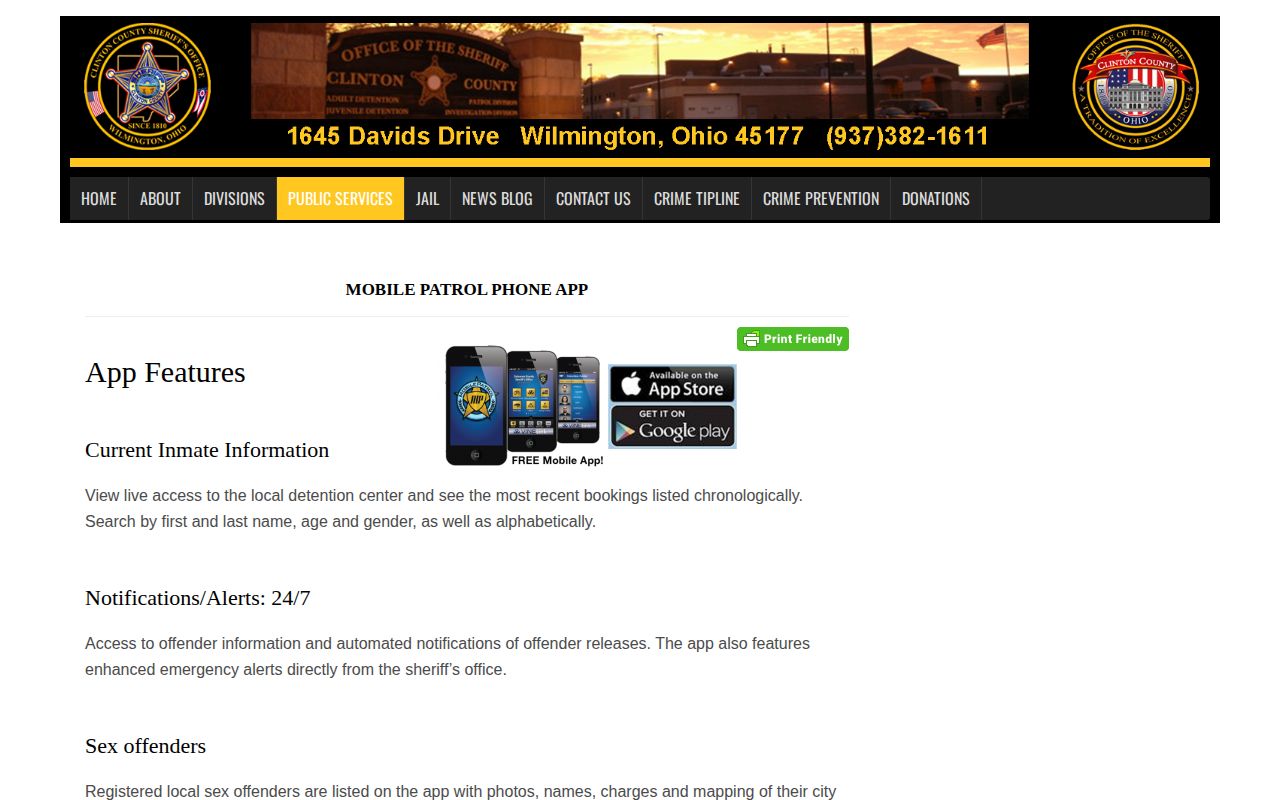
The source supports recent booking access and alerts, but not a historic mugshot gallery.
Request a Clinton Booking Photo
The sheriff’s Records section maintains reports and provides copies through public-record requests. No sheriff-specific photo price or fixed response period was verified. Ask about cost and format first.
- Identify the name, birth date if known, booking date or range, case number, and booking number.
- Request the booking photograph tied to that booking.
- Also request the final release or transfer entry and disposition.
- Ask for electronic delivery and actual cost before copies are made.
- If a part is withheld, ask for the legal basis.
Ohio law does not require a special form when a record is reasonably identified. A narrow request is easier to route than a demand for every file.
Clinton Photos Beyond the Sheriff
An ODRC detail may show a state image after a person enters Ohio prison custody. It is not necessarily the Clinton County booking photo and cannot document an ordinary county-only stay. Official press releases and local news archives may retain arrest images, but they may not reflect later dismissal, acquittal, sealing, or release.
Commercial galleries and removal services are not linked or endorsed. They may be stale, misidentified, or stripped of case context. Use the originating government file.
Clinton Mugshot Sealing and Removal
Ohio Revised Code Chapter 2953 governs sealing and expungement. Eligibility depends on the case, offense, result, waiting period, and current law. An official order changes access duties. If an originating record is wrong, contact the sheriff or court that created it and identify the exact error.
ORC 2927.22 addresses commercial booking-photo practices. Official access and commercial republication are different. No paid service replaces a court order or custodian correction.
Clinton Registry Photos Are Narrow
The sheriff’s clearest official post-release photo publication is its sex-offender registry page. It displays photographs of people currently required to register. That is not a list of all released inmates. The page also warns that harassment or intimidation is illegal.
The official Clinton County registry page appears below.
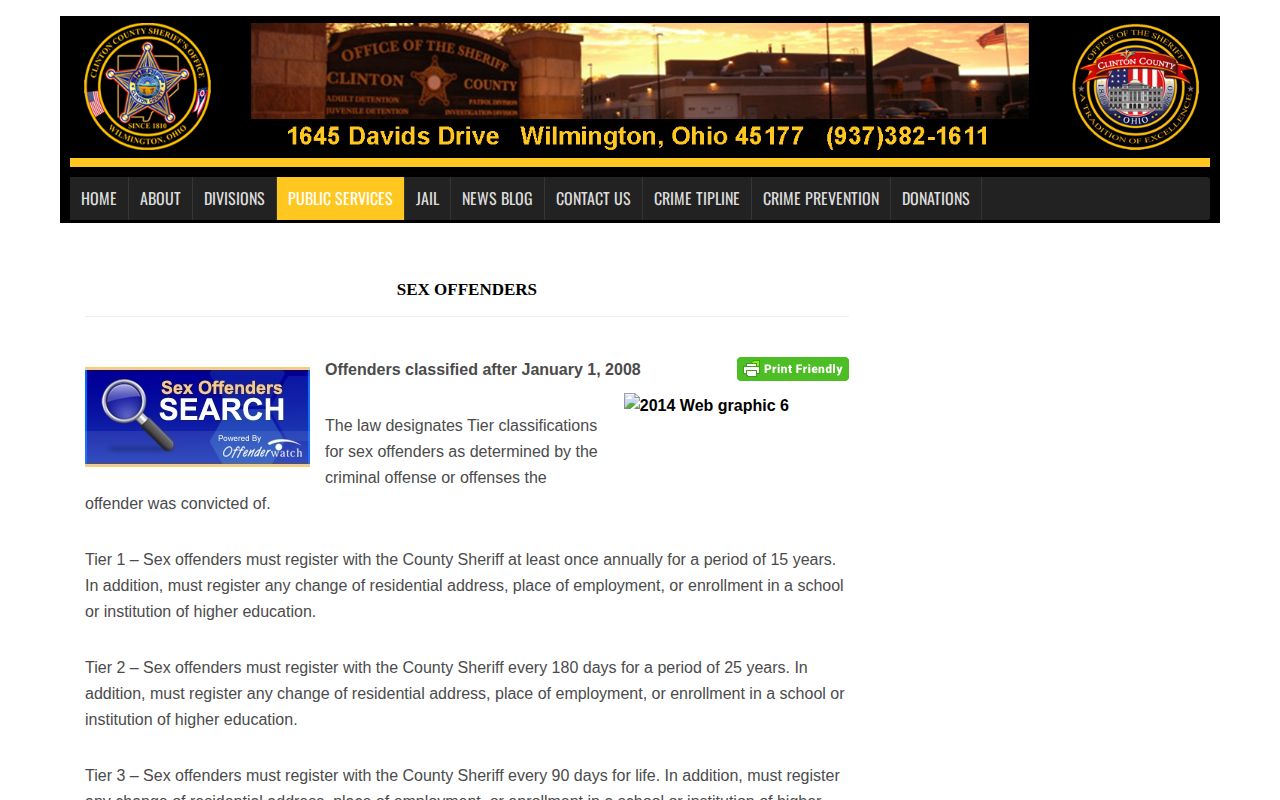
The image documents a limited registry channel, not a general release gallery.
Read Clinton Release Mugshots Carefully
Match a photo to the booked name, booking number, date, and case. Similar names and reused images cause errors. A booking image does not establish guilt, release date, supervision, residence, or current risk. Pair it with the court disposition and final jail entry.
If an official source limits access after sealing, do not seek a mirror to evade the order. The Clinton County release-record path gives the proper custody and disposition route.
Clinton Active Roster Photo Limits
The public sheriff product is explicitly titled “Active Inmates.” It is not a historic release list. Inspecting a current record may reveal the image field associated with that booking, but the research found no promise that a photo remains online after release. Saving repeated roster snapshots is also not a sound substitute for a release archive because a person can be booked and released between checks.
Enter the roster through the official Clinton County Sheriff page. The application itself is hosted at a numeric address, so using the sheriff’s official link helps distinguish the Ohio source from counties with the same name in other states and from commercial copies.
If a name disappears, request the underlying booking image and final custody entry. Do not label the disappearance as release without proof of the destination and disposition.
Identify Clinton Mugshots by Booking
A precise photo request includes the person’s booked name, aliases if recorded, date of birth or another permitted identifier, booking number, booking date and time, arresting agency, and court case number. Those fields separate similar names and connect the image to one custody event. Charges, bond, and custody-location details may help identify the record, but they do not prove the later outcome.
Request the release or transfer fields at the same time. Useful fields include release date and time, release type or disposition, and destination or receiving agency when nonexempt. “Bond” indicates release under court terms, not dismissal of the case. “Time served” relates to sentence credit or completion. “Transfer” means continued custody elsewhere.
A photograph is an identity artifact. It should never be used as shorthand for a person’s current legal status, and a later court entry may change the public context of the booking.
ODRC Photos for Clinton Releases
The ODRC Offender Search covers state prisoners, released or judicially released people, APA-supervised people, and other published status groups within its scope. A detail can display an offender image, sentence information, status, and release detail. Match the offender number, county of commitment, sentence, and identity before treating the image as the correct person.
An ODRC image belongs to the state record. It may not be the image taken at Clinton County Jail, and many people who leave the county jail never enter state custody. County of commitment can link a state sentence to Clinton County, but residential county is used differently for people under APA supervision.
When the person remained in local custody only, return to the sheriff and court. ODRC is not a historic archive for ordinary county bookings.
Clinton Court Records Add Photo Context
Municipal Court and Common Pleas provide the legal context that a booking image lacks. Municipal Court covers matters within its jurisdiction. Common Pleas is central for felony charges, state-prison sentencing, and judicial release. Find the right case, compare identifiers, and read filed journal entries rather than relying on a brief search label.
A bond entry may explain why custody ended before trial. Dismissal or acquittal describes the case result, though another hold may exist. A sentence can show jail days, community control, or conveyance to ODRC. Court records can lag, so the jail’s final custody entry remains the source for the operational release time.
If the case is sealed or expunged, follow the court order and the current access rules. Do not use a stale press image or copied gallery to defeat an official restriction.
Correct a Clinton Booking Image
Record correction starts with the custodian that published or supplied the image. Give the exact URL or record, the person and booking identifiers, and a short description of the claimed error. If the issue is identity, explain which field does not match. If a court order changed access, provide the case and order information the office needs to locate it.
The sheriff’s correction or removal procedure and a special booking-photo fee were not published in the reviewed sources. Do not assume a deadline or promise an outcome. Ask the office what process applies and keep its written response. For a copied news image, provide the originating correction or court order to the publisher, but remember that the government office does not control an outside archive.
Ohio’s anti-pay-to-remove statute addresses defined commercial conduct. It does not turn every official booking photo into a removable record on request.
Use Clinton Booking Photos with Care
Clinton County records use several words that can be lost when an image is copied alone. A bond release means the person left pretrial custody under court terms, not that the charge vanished. A dismissal or acquittal is a case result. A transfer means another custodian received the person. Probation, parole, judicial release, and post-release control each describe a distinct path. The photo proves none of them.
Keep the image beside its source, booking date, and case. Do not crop away agency labels or present an old arrest image as current. When an official page gives a warning, limitation, or correction, carry that context forward. The registry’s photo channel is especially narrow because it applies only to people with a current statutory registration duty.
For a former county detainee, the best chain is the sheriff booking record, the final release or transfer entry, and the correct court docket. For a state prisoner, use ODRC identity, sentence, status, and release fields. For a federal record, use the responsible federal source. Mixing those systems creates false matches.
A respectful records-based approach protects accuracy. It also avoids turning a booking image into a claim about a person’s present life, location, or conduct.