
Clinton County 24-Hour Release Access
The Clinton County Sheriff links to an official product titled Active Inmates. It is a live roster for people displayed in Clinton County Jail custody. The official sources reviewed did not show a released-person filter, a recent-release archive, or a separate last-24-hours URL. That absence matters. Removing a name from a live list is not the same act as publishing a release record.
A missing row provides one useful clue: the person is no longer displayed as active at the time checked. It does not disclose whether the person posted bond, finished a sentence, moved to another jail, entered an Ohio prison, left under a court order, or remained held by another authority. The final jail entry and court journal resolve those possibilities. When the destination is unknown, the accurate statement is that the person left Clinton County Jail custody.
Request Clinton County Same-Day Releases
The most direct substitute for a missing web feed is a focused request for records already kept by the Clinton County Sheriff’s Office. Define the period by exact beginning and ending times and include the time zone. A request for the preceding day can shift while it is being processed, so fixed timestamps make the scope clear. Ohio public-records law concerns existing records. If no compiled daily list exists, ask for the underlying release or transfer entries in the form maintained by the office.
- Set an exact start and end for the 24-hour interval.
- Ask for existing final release or transfer entries within that span.
- Request the name, booking identifier, booking time, custody-end time, and disposition where available.
- For one person, add a date of birth if known, the court case number, and booking date.
- Compare any disposition and destination field with the matching court journal.
The jail information source lists Clinton County Jail at 1645 Davids Drive, Wilmington, Ohio 45177, with jail lines at (937) 383-4813 and (937) 383-3292. A call can address current custody or route a request, but a verbal answer is not a certified record. The county Public Records Act page explains that Ohio law, rather than federal FOIA, governs state and local requests.
A precise request should describe the final custody entry rather than insist on a form called a “24-hour release list.” Clinton County research did not verify that such a compiled form exists. Ask for the existing jail-management or release entries that match the fixed interval. If some fields are exempt or redacted, the remaining release time, disposition, booking identifier, or receiving-agency information may still answer the core question. No local copy fee, turnaround promise, or retention period was verified, so those points should be confirmed with the records custodian instead of estimated.
Prompt action can help when online visibility is brief. The active roster is not a historical store, but the underlying jail, incident, court, and transport records may follow approved retention schedules. Include a reasonable date range and enough identifiers to make the record identifiable. If the response gives only a transfer code or agency name, follow that receiving custodian rather than counting the event as release to the community.
Clinton County Release Record Fields
“Release record” is a practical description. The proof may be held in a jail-management entry, booking sheet, transport entry, or court journal rather than one form bearing that title. Request the information needed to distinguish identity, custody timing, and outcome. A photo can help identify a booking, but it cannot establish that a release occurred.
| Field | What it establishes |
|---|---|
| Name and booking identifier | Connects the event to the right jail admission. |
| Booking date and time | Marks when the Clinton County custody episode began. |
| Release or transfer time | Records when that custody episode ended. |
| Disposition or reason | May distinguish bond, time served, court release, or transfer. |
| Destination or receiving agency | Shows whether another custodian received the person, if nonexempt and recorded. |
| Court and case number | Links the jail event to the controlling case record. |
Read the fields together. “Bond” means release under pretrial terms, not the end of the case. “Time served” can reflect sentence completion or credit under an order. A hold can prevent community release after one local basis ends. A transfer ends the local roster entry but continues custody elsewhere.
MobilePatrol Tracks Clinton County Changes
Clinton County documents a mobile option more fully than a release list. The sheriff’s MobilePatrol page describes live detention-center access, recent bookings in chronological order, searches by name, age, gender, or alphabetic order, and automated offender-release notifications. Those functions make the app useful for following a known person prospectively.
Select the Clinton County, Ohio agency, confirm identity on the custody record, and use the notification control offered by the current app. The sheriff does not promise a browsable 24-hour release archive, a set retention period, or a photo on every app entry. Button labels and vendor features may also change. Preserve the app’s confirmation state, then check an alert against the jail entry or court record.
The official feature description can be seen below. It shows why the mobile channel helps with timely changes even though it does not turn the public website into a same-day release feed.
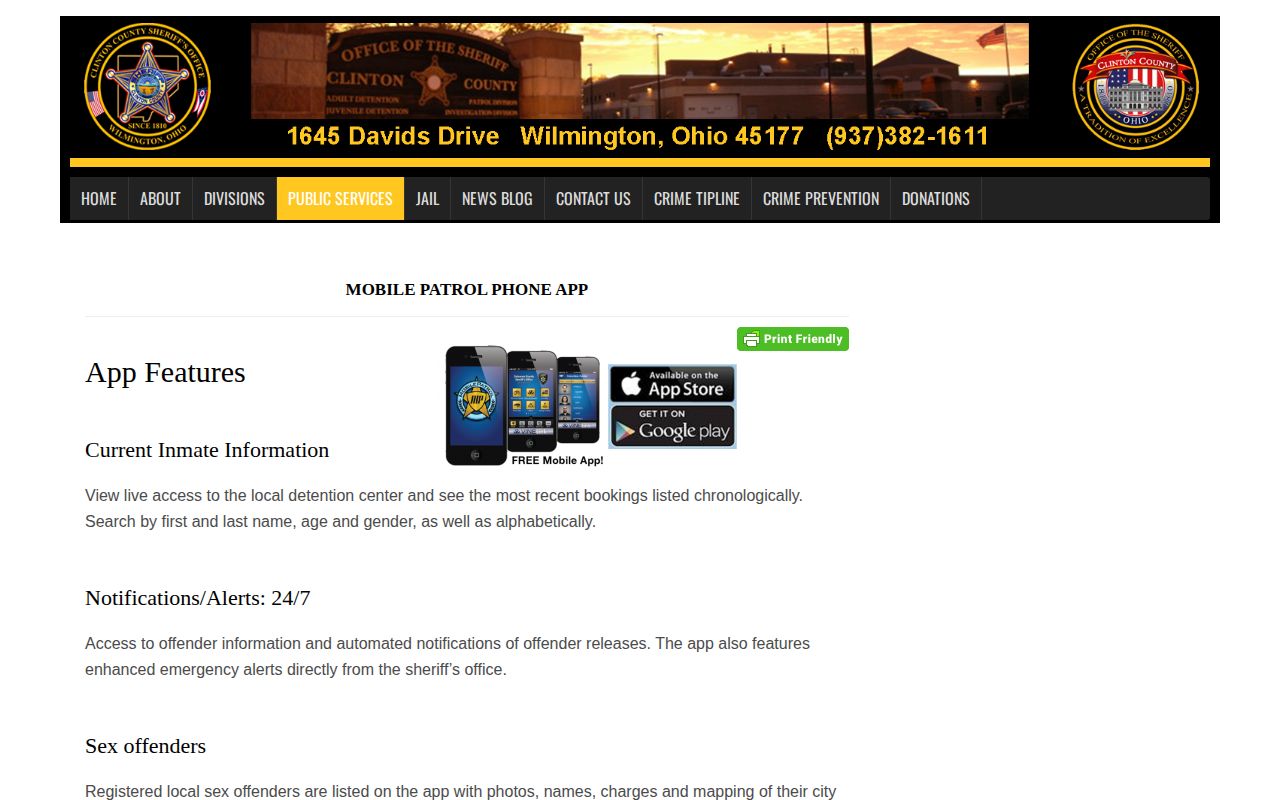
The screenshot supports use of recent-booking search and release alerts, not a claim that every person released today remains in an app archive.
Why Clinton County Names Disappear
The distinctive local data issue is disappearance without a sheriff-hosted release archive. The Active Inmates page can confirm that a name is displayed now. It cannot explain a name that has dropped off. A pretrial detainee may have posted bond or received recognizance terms. A person serving a local term may have completed it. Someone sentenced on a felony may have been conveyed to the Ohio Department of Rehabilitation and Correction instead of released.
The current roster’s layout is available through the official Active Inmates source. Note the time of every check because the list changes.
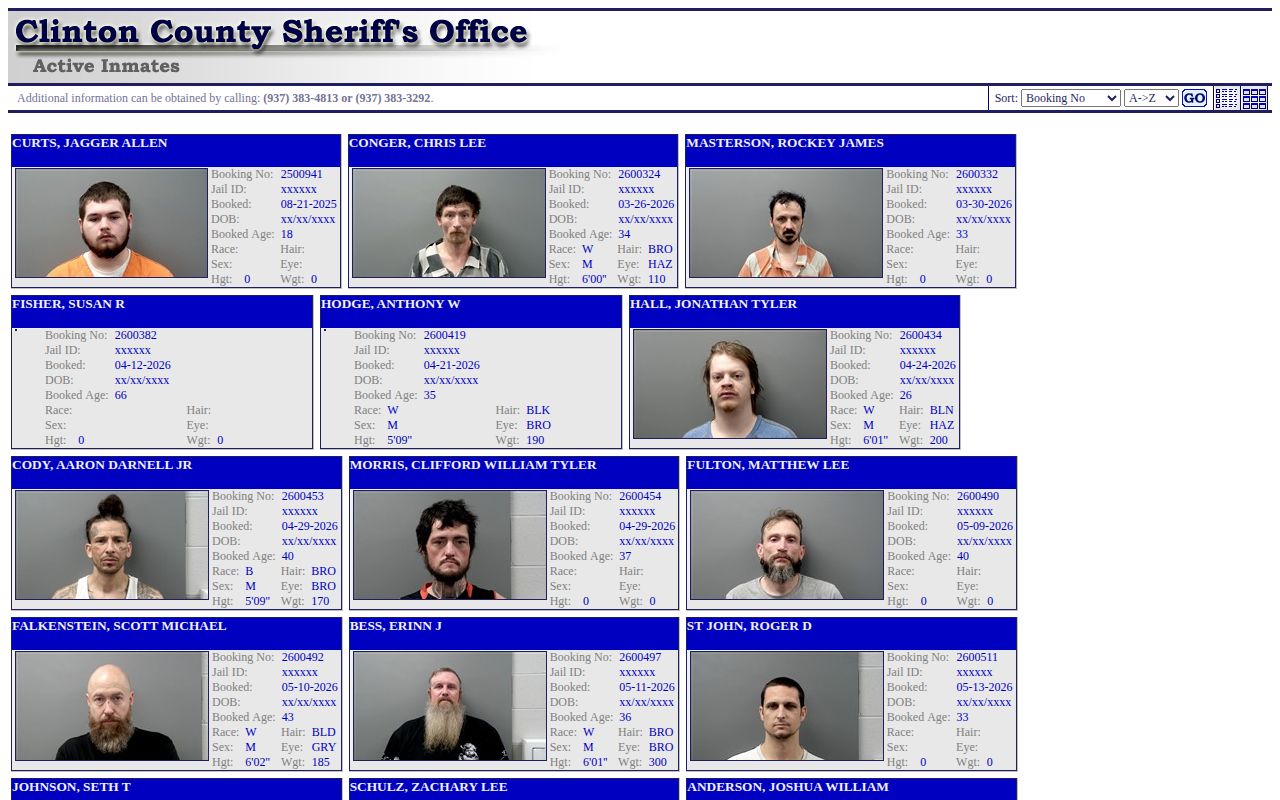
Its current-custody heading is the key limit. A former detainee needs a release entry, transfer record, or filed court order rather than an inference drawn from absence.
Confirm Clinton County Release Reasons
Use the court with jurisdiction over the case. Clinton County Municipal Court covers matters within its jurisdiction, including misdemeanors and traffic cases. Common Pleas is the main route for felony cases. A bond entry, dismissal, sentence, jail-time credit, judicial-release order, or prison conveyance can explain why local custody ended. Court data can lag and does not replace the jail’s operational time stamp.
The Municipal Court search permits one search field at a time, except that a name can be paired with date of birth. Its own disclaimer warns that online information is limited by the retrieval system. Common Pleas postings can also trail judicial action. For that reason, a docket result is corroboration, not a real-time jail door log. Open the journal entry when available and verify the person through the case number, charge, and dates before connecting it to the custody-ending entry.
For state-prison custody, search the ODRC Offender Search. It includes status choices such as Incarcerated, Released, APA Supervision, and Violators at Large. A person who only bonded out of Clinton County Jail may never appear there. Federal sentenced custody belongs in the BOP locator, while VINE serves as a notification layer for participating sources. These systems should not be merged into one result.
For a broader date span, the Jail Releases: 72 Hours process uses a fixed three-day request window. A named-person search and the full local records chain are covered on the Clinton County release search.
Released Versus Clinton County Custody
Status depends on the custodian and destination. Someone displayed on Active Inmates remains shown in Clinton County Jail custody. Someone absent has an unresolved status until another record explains the change. A release disposition that returns the person to the community differs from a transfer to ODRC, another county, a treatment placement, or a federal authority.
- Community release
- Custody ends under bond, sentence completion, dismissal, probationary terms, or another documented order, with no other hold shown.
- Transfer
- Clinton County custody ends because another agency or facility receives the person.
- Discharge
- A record term often used when a sentence or supervision obligation formally ends.
- Hold
- A legal basis that can keep a person confined after another case or local basis ends.
Use two records when the distinction matters. Pair the jail’s custody-end entry with the court disposition, or pair an app alert with the originating jail record. That approach preserves both the actual time and the legal reason.